Call us now :08045814334
 Send Inquiry
 Send Inquiry
Indexing Table Type Deflashing Machine
Indexing Table Type Deflashing Machine Specification
- Automation Grade
- Semi Automatic
- Current Range
- 3-5 A
- Phase
- Three Phase
- Application
- Deflashing of Molded Components
- Frequency
- 50 Hz
- Output Voltage
- 415 V
- Power Source
- Electric
- Diameter
- 600 mm Table
- Power Consumption
- 2.5 kW
- Equipment Type
- Industrial Deflashing Machine
- Type
- Indexing Table Type Deflashing Machine
- Condition
- New
- Motor Type
- Servo Motor
- Material
- Mild Steel
- Power
- 3 HP
- Voltage
- 415 V
- Dimensions
- 1200 x 900 x 1500 mm
- Input Voltage
- 415 V AC
- Rated Current
- 5 A
- Rated Capacity
- 50-100 pieces/hour
- Noise Level
- < 75 dB(A)
- Component Loading
- Manual
- Safety Features
- Interlocked Guarding, Emergency Stop
- Table Indexing Positions
- 6, 8, or 12 stations (configurable)
- Table Drive
- Gear Motor with Cam Indexer
- Cycle Time
- 10-30 seconds (depending on component)
- Deflashing Method
- Rotary Cutter / Pneumatic Tool
- Operator Panel
- Touch Screen HMI
- Cooling System
- Optional Air Jet or Blower
- Compressed Air Requirement
- 6 bar (if pneumatic tools used)
- Finish
- Powder Coated
- Control System
- PLC Based
About Indexing Table Type Deflashing Machine
It is a Indexing Table Type Deflashing Machine. It is ideal for medium to large products made from PA (with more than 40% glass fiber, PPS, LCP, PBT or PET. Thermoset products such as bakelite, BMC, SMC are also applicable. It also deals with large zinc-alloy products and other alloy castings.
The deflashing process is simply as below. Firstly, products are fixed on a gripper which locates outside a resolving door. The door turns exactly at 180 degree driven by motor and sends the products to designated position in the blasting room. Products will rotate themselves as driven by rotary motor. Meanwhile, 12 guns throws out nylon shots bumping into products. When deflashing time is up, the door automatically indexes out those finished products and at the same time indexes in products to be deflashed. It is quite an automatic circulation system.Customer can choose computer control or manual control. As for computer control, one press only can start the whole system and achieve continuous deflashing.
The deflashing process is simply as below. Firstly, products are fixed on a gripper which locates outside a resolving door. The door turns exactly at 180 degree driven by motor and sends the products to designated position in the blasting room. Products will rotate themselves as driven by rotary motor. Meanwhile, 12 guns throws out nylon shots bumping into products. When deflashing time is up, the door automatically indexes out those finished products and at the same time indexes in products to be deflashed. It is quite an automatic circulation system.Customer can choose computer control or manual control. As for computer control, one press only can start the whole system and achieve continuous deflashing.
Request
Callback
Callback
Advanced Table Indexing System
This machine comes with a precision gear motor and cam indexer, allowing for automated and repeatable positioning across 6, 8, or 12 stations. This improves cycle efficiency and optimizes throughput, making it suitable for diverse production volumes and component types.
Safety and User-Friendliness
Equipped with an interlocked guarding system and emergency stop feature, the machine ensures operator safety during operation. The intuitive touch screen HMI simplifies process control, enabling quick adjustments and easy operation, even for new users.
Efficient Deflashing Process
With options for rotary cutter or pneumatic tool deflashing, the machine delivers consistent removal of excess material. Optional air jet or blower cooling maintains component integrity and process stability. Designed for applications in industrial environments, it supports high-quality production output.
FAQs of Indexing Table Type Deflashing Machine:
Q: How does the Indexing Table Type Deflashing Machine operate?
A: The machine uses a PLC-based control system and a servo motor-powered cam indexer to advance the table to each station. Components are loaded manually and undergo deflashing at each position using either a rotary cutter or pneumatic tool, depending on the requirement.Q: What types of components can this deflashing machine process?
A: It is ideal for molded components requiring removal of flash, serving applications in various industries such as automotive, electrical, and consumer goods. The machine accommodates a table diameter of up to 600 mm and is adaptable for components of different shapes and sizes.Q: When is the cooling system used during operation?
A: The optional air jet or blower cooling systems are utilized when processing heat-sensitive materials or when continuous operation is required, ensuring component integrity and preventing thermal damage during the deflashing process.Q: Where is the Indexing Table Type Deflashing Machine typically installed?
A: It is installed in industrial manufacturing facilitiesespecially those requiring semi-automatic, high-throughput deflashing of molded parts. The machine can be integrated easily into existing production lines or used as a standalone solution.Q: What benefits does this machine provide over manual deflashing methods?
A: The automated indexing and deflashing system increases productivity, ensures consistent quality, reduces manual labor, and enhances operator safety with its interlocked guarding and emergency stop features. It also delivers lower noise levels (<75 dB(A)) and a cleaner working environment.Q: How is the operator panel designed for user ease?
A: The operator panel features a touch screen HMI, making it straightforward to set parameters, monitor machine status, and control the process. This minimizes training time and allows for quick troubleshooting and adjustments.Q: What are the power and air supply requirements for this equipment?
A: The machine operates on 415 V AC, requires a three-phase supply at 50 Hz, and consumes approximately 2.5 kW of power. If pneumatic tools are used, a compressed air supply of 6 bar is necessary for optimal performance.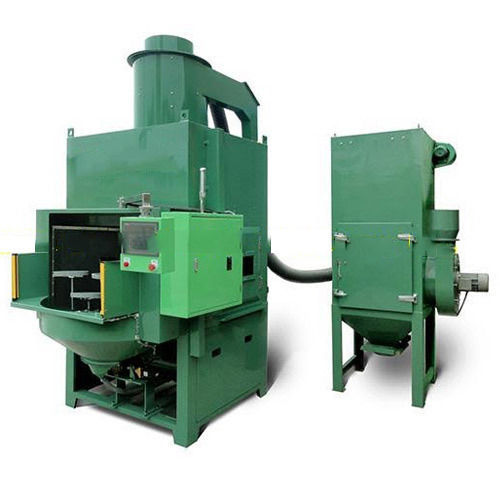
Tell us about your requirement

Price:
Quantity
Select Unit
- 50
- 100
- 200
- 250
- 500
- 1000+
Additional detail
Mobile number
Email

More Products in Deflashing Machines Category
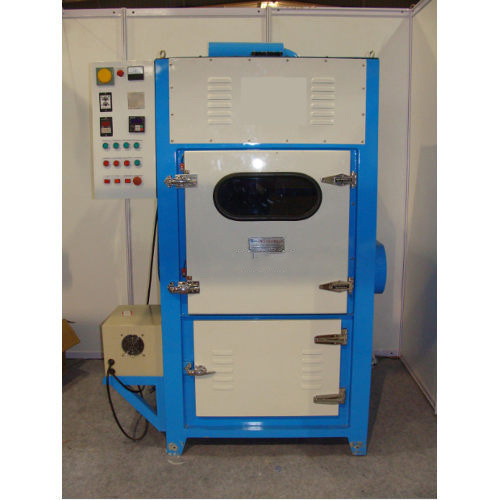
Tumble Batch Deflashing Machine
Power Source : Electric
Automation Grade : SemiAutomatic
Type : Tumble Batch Deflashing Machine
Condition : New
Material : Mild Steel (MS), Stainless Steel
Application : Rubber and plastic product deflashing
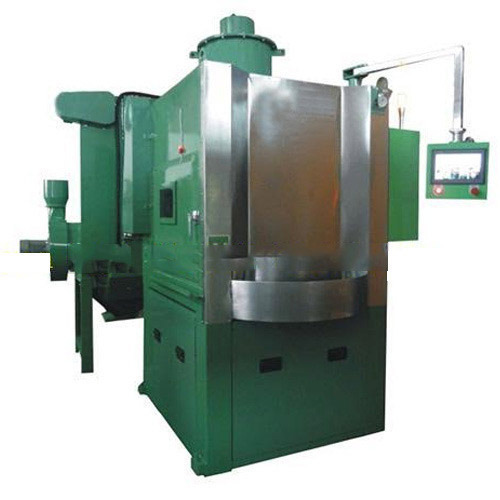
Rotary Table type Deflashing Machine
Power Source : Electric
Automation Grade : Automatic
Type : Rotary Table type Deflashing Machine
Condition : New
Material : Highgrade Stainless Steel
Application : Rubber and Plastic Moulded Product Deflashing
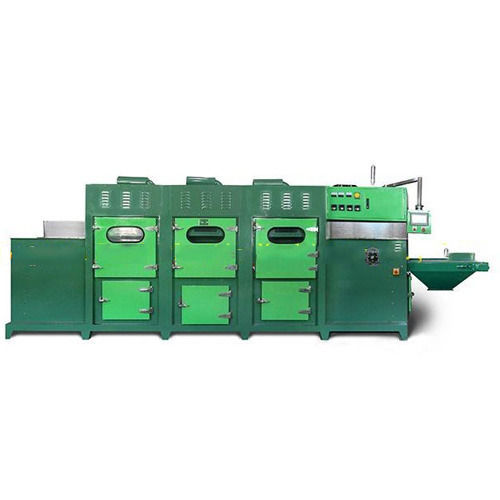
Automatic Tunnel Type Continuous Deflashing Machine
Power Source : Electric
Automation Grade : Automatic
Type : Continuous
Condition : New
Material : Mild Steel
Application : Deflashing
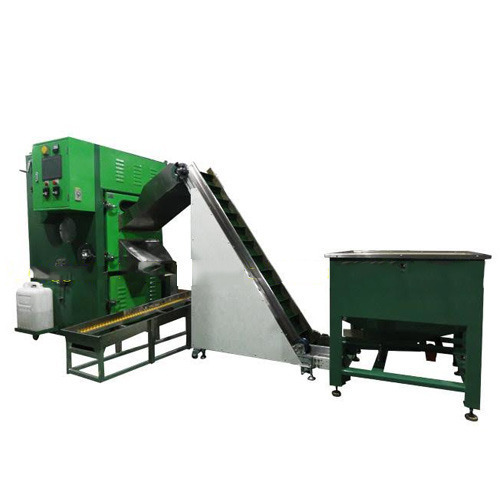
Automatic Tumbling Belt Deflashing Machine
Power Source : Electric
Automation Grade : Automatic
Type : Belt Tumbling Machine
Condition : New
Material : Metal
Application : Deflashing of components

 Send Inquiry
Our Products
- Blasting Nozzles
- Paint Spray Booth
- Abrasive Blasting Media
- Steatite Ceramic Beads
- Abrasive Recovery System
- Abrasive Blasting Machines
- Zirconium Silicate Beads
- Air Pollution Control System
- Yttria Stabilized Zirconia Beads
- Footwear Mold Cleaning Machine
- Special Purpose Blasting Machines
- Zirconia Alumina Composite Beads
- Cut Wire Shots
- Vibro Finishing Beads
- Zirconia Alumina Composite Beads for Bracelets
- Alumina Zirconia Grains Coated & Bonded Abrasives
- New Items
- Deflashing Machines
- Deflashing Media
- Plastic Grit
- Spare Parts for Blasting Machine

B No. 16- A- 3, Heavy Industrial Area, Jodhpur - 342003, Rajasthan, India

Mr Trideep Raj Bhandari
(Executive Director)
Mobile :08045814334
 Send Inquiry
 Send SMS
Developed and Managed by Infocom Network Private Limited.
